


 For all latest news, follow the Daily Sun's Google News channel.


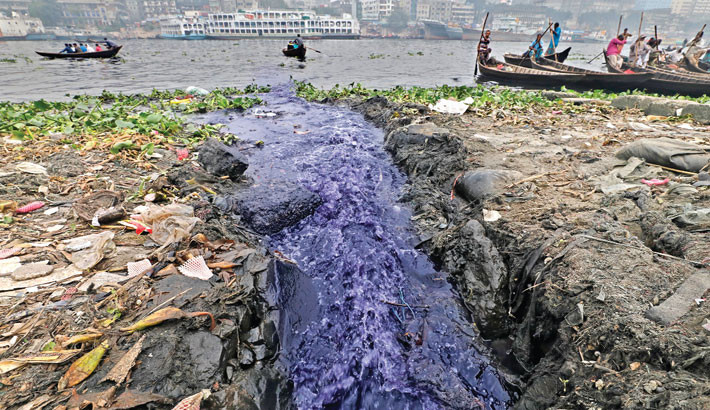
Buriganga remains polluted throughout the year
Daily Sun Report, Dhaka
Published: 28 Sep 2025, 11:43 AM
File Photo: Kamrul Islam Ratan
The Buriganga River has long been choking with pollution, flowing past the capital like a sorrowful river year-round. Even during the rainy season, pollution levels do not decrease, and in the dry season the filthy water emits a strong stench.
A study by the Center for Atmospheric Pollution Studies (CAPS) analyzed seasonal variations in Buriganga’s water quality. Between 2022–23, CAPS monitored ten parameters at eight locations over all six seasons, collecting data from Mirpur Bridge, Bachila Bridge, Hazaribagh, Kamrangir Char, Chandni Ghat, Sadarghat, Dholai Khal, and Postgola Bridge. Parameters included dissolved oxygen, biochemical oxygen demand, visibility, electrical conductivity, temperature, pH, turbidity, alkalinity, total suspended solids (TSS), and total dissolved solids (TDS). The data were analyzed and compared with the national environmental standards, 2023.
CAPS found that most parameters were highly concerning in spring, while water quality was best during the rainy season. Human activities — mainly sewage and industrial discharge — along with low rainfall in the dry season, are believed to drive high pollution levels.
On this Sunday, World Rivers Day is being observed in Bangladesh, with government and private initiatives. The 15-member research team at CAPS, led by its founder and chairman Professor Dr Ahmad Kamruzzaman Majumder, conducted the study.
During a conversation with Kaler Kantho, Dr Kamruzzaman noted that Buriganga lost its natural flow in the 1990s and has now become a river of pollution, with untreated sewage and industrial waste constantly degrading its water quality. The study aimed to assess and compare water quality across six seasons and eight locations to understand the pollution patterns, he added.
Oxygen Deficit for Eight Months: Dissolved oxygen (DO) is crucial for aquatic life, requiring at least 5 mg per liter. CAPS research found the average DO in Buriganga across six seasons and eight locations was only 3.01 mg/L. Only during the rainy (6.55 mg/L) and autumn (6 mg/L) seasons did oxygen levels support life; the lowest was in winter at 0.63 mg/L.
High BOD Levels: Biochemical Oxygen Demand (BOD) averaged 107.94 mg/L, nearly 18 times the permissible level for fisheries (6 mg/L). Spring readings peaked at 217.50 mg/L — 36 times higher than acceptable — making the river unsuitable for fish farming.
Declining Water Clarity: Visibility was highest in late autumn (22–25 inches) and lowest in spring (9 inches).
Electrical Conductivity and Temperature: Highest conductivity occurred in spring (917 µS/cm) and lowest in the rainy season (182 µS/cm), all within safe limits. Average water temperature was 27.55°C, ranging from 23.13°C in winter to 29.32°C in summer, below the 30°C permissible limit.
Other Parameters: Turbidity exceeded safe limits in dry seasons; pH (7.73) and alkalinity (around 150 mg/L) remained acceptable. Total suspended solids (TSS) were highest in Dholai Khal, while total dissolved solids (TDS) stayed below maximum limits.
Recovery Measures: Dr Ainun Nishat of BRAC University emphasized treating industrial and municipal waste, restoring historical water sources from the Brahmaputra, Ganga, and Yamuna, and dredging riverbeds to widen and deepen the river.
Government Action: Syeda Rizwana Hasan, advisor to the Ministry of Environment, Forests, and Climate Change, noted ongoing discussions with the World Bank to restore rivers around Dhaka. However, Buriganga is not yet included due to complex challenges, including thousands of tons of polythene on its riverbed. “How will we get rid of this polythene, it is impossible for us to complete the process within the only one-and-a-half-year tenure,” she said.