


 For all latest news, follow the Daily Sun's Google News channel.


Jamaat seen trying to please India
Indian professor’s speech sparks discussion after meeting Jamaat leaders in Dhaka
Daily Sun Report, Dhaka
Published: 24 Sep 2025, 11:52 PM
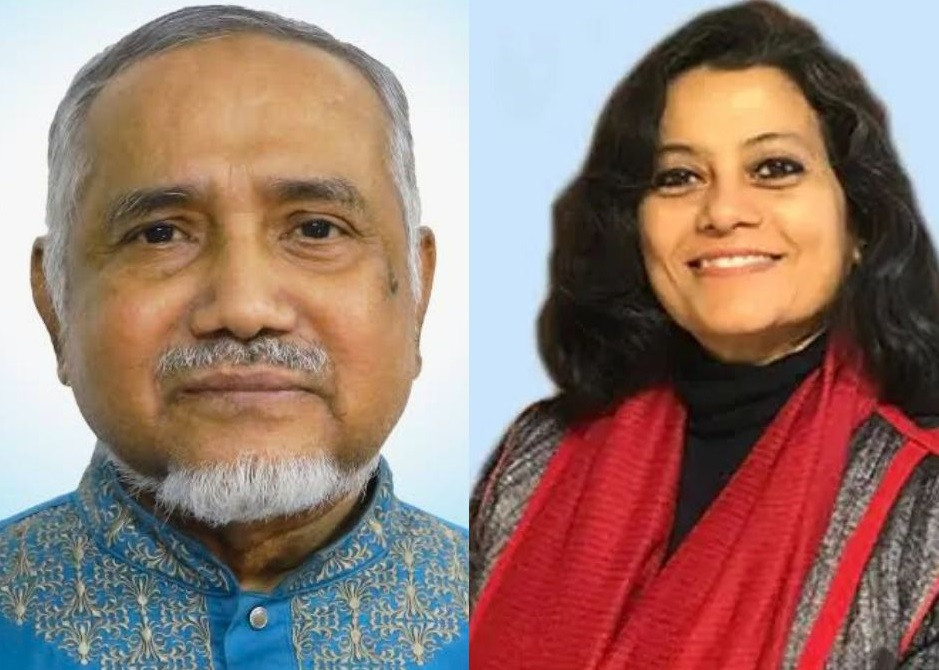
Jamaat-e-Islami's Nayeb-e-Ameer Syed Abdullah Mohammad Taher (left) and Indian analyst Sriradha Datta (right). Photo: Collected
After holding meetings with Jamaat-e-Islami leaders in Dhaka, Indian academic Sreeradha Datta revealed key insights about the party’s current position upon returning to India.
Her account, later reported by BBC Bangla on 18 September, has reignited debate over Jamaat’s political strategy and shifting posture toward India.
According to the report, Jamaat’s Nayeb-e-Ameer Syed Abdullah Mohammad Taher told Datta that the party would not impose Islamic Sharia law if it came to power. Analysts say this was a clear attempt to reassure India that Jamaat does not pose a threat to its interests.
Taher also acknowledged that senior Jamaat leaders such as Motiur Rahman Nizami and Delwar Hossain Sayeedi had publicly apologised for their roles in 1971, and that the current leadership accepts that apology. He further stressed that the new generation of Jamaat leadership is eager to improve ties with India.
On sensitive issues such as the Chattogram arms smuggling case and other anti-India incidents during the BNP government, Taher claimed Jamaat had no involvement, shifting the blame entirely onto BNP.
Reacting to these revelations, Facebook user Sad Rahman wrote: “Jamaat is loudly trying to reassure India—how do you see this?” He further argued: “Among all active political parties in Bangladesh right now, Jamaat-e-Islami seems to be the most India-oriented. But why is this India-leaning posture being concealed?”
Rahman also criticised self-styled anti-India commentators for ignoring Jamaat’s new stance. “Figures like Pinaki Bhattacharya and Goutam Das are openly campaigning for Jamaat,” he noted, “but why are they silent about the party’s closeness to India? And why is BNP being branded as India’s follower while Jamaat is spared?”
Analysts suggest Jamaat is strategically adopting a pro-India narrative to gain legitimacy, despite its long-standing image as an anti-India ally of BNP. The controversy has sparked fresh questions about the party’s real intentions and why its India-friendly moves are being overlooked while BNP continues to be painted as the adversary of New Delhi.