


 For all latest news, follow the Daily Sun's Google News channel.


Dhaka-Delhi relations and some reflections
Special Correspondent
Published: 17 Aug 2026, 08:58 PM
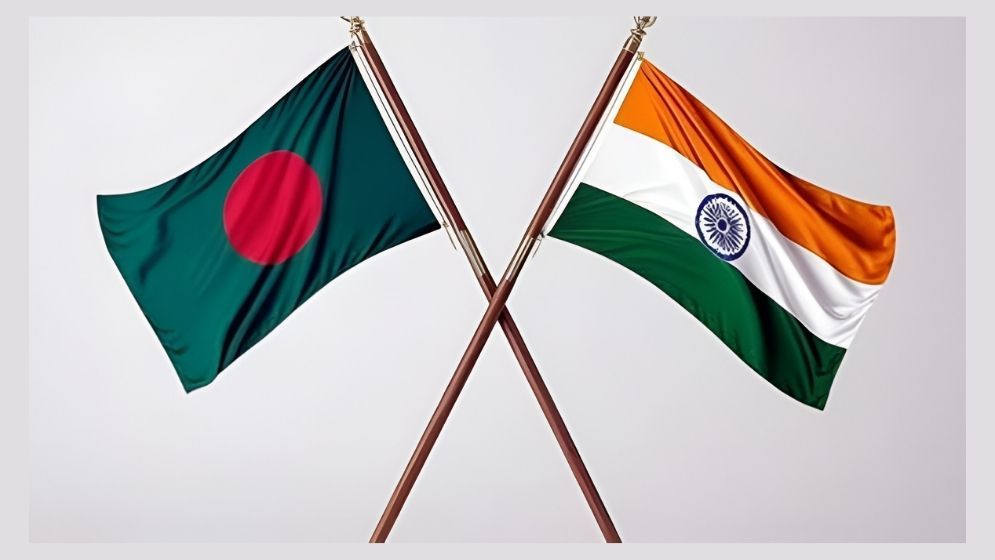
For all the anger surrounding ousted prime minister Sheikh Hasina's recent media appearance in New Delhi, one uncomfortable question deserves to be asked in Dhaka: who actually benefits if Bangladesh-India relations remain permanently strained?
The audio address and subsequent interaction with journalists involving the former prime minister at the Foreign Correspondents' Club (FCC) of South Asia in Delhi on 5 August was expected by some to be of limited consequence. The opposite happened. Hasina's remarks received extensive international attention, while Dhaka reacted angrily, condemning the event and warning that allowing her to make political statements from India could damage bilateral relations. India, meanwhile, said it had no involvement in organising the event and pointed to the FCC's status as a private institution.
The episode has undoubtedly made an already difficult relationship more difficult.
Dhaka has every right to object to Hasina's political activities from India. It has an even stronger reason to pursue her extradition through diplomatic and legal channels. But there is a difference between pursuing a serious bilateral grievance and allowing that grievance to become the organising principle of an entire relationship.
A relationship larger than Sheikh Hasina
Bangladesh and India have too many permanent interests to allow one individual to define their relationship.
Trade, energy, border management, water sharing, transport, connectivity, security and people-to-people relations all require sustained engagement. The Ganges water-sharing arrangement needs attention, while the Teesta issue remains unresolved. Neither country can wish the other away.
India's new High Commissioner to Bangladesh Dinesh Trivedi struck a positive tone in late July, saying that no bilateral problem was beyond resolution and that a visit by Prime Minister Tarique Rahman could help move things forward constructively.
India extended two separate invitations to the Bangladeshi prime minister. In February, Indian Prime Minister Modi invited Prime Minister Tarique Rahman and his family for a bilateral visit. More recently, India invited him to attend the 18th BRICS Summit in New Delhi on 12-13 September as a special guest.
These developments present Dhaka with an important test of diplomatic maturity.
The BRICS choice
Tarique Rahman has yet to take up Modi's invitation for a bilateral visit. The BRICS invitation now provides another opportunity for engagement with New Delhi without making the trip exclusively a bilateral state visit.
If Tarique Rahman accepts, there may be pressure from political hardliners who will argue that he should not visit India while Sheikh Hasina remains there. If he declines, Bangladesh risks appearing to allow a single bilateral dispute to determine its engagement with one of its most important neighbours.
India also needs to deal seriously with Bangladesh's extradition request. New Delhi has acknowledged receiving the requests and says they are being examined under its domestic legal framework. Prolonged uncertainty will inevitably deepen suspicion in Dhaka.
India has an interest in a stable Bangladesh. It should therefore avoid allowing its territory to become a platform for political activity that could further polarise Bangladesh.
The Hasina question needs a legal solution
Hasina has repeatedly said she intends to return to Bangladesh in December. If she does, the Bangladesh government can deal with her according to law and allow the judicial process to take its course.
That would ultimately be a matter for Bangladesh's courts and institutions rather than for India.
There is also a broader political point. So long as Hasina remains in India, she will remain a factor in Bangladesh's domestic politics and in Dhaka-Delhi relations. Stronger press statements from Dhaka will not change that reality.
Nor will refusing to meet Indian leaders resolve it.
Direct political engagement gives Bangladesh a better opportunity to press its case while simultaneously pursuing its wider national interests.
Who benefits?
This brings us back to the central question.
Who benefits from a strained Bangladesh-India relationship?
Certainly not Bangladeshi or Indian exporters. Not consumers dependent on regional supply chains. Not businesses that require predictable connectivity. Not communities along the border. Not those waiting for progress on water sharing.
Nor does prolonged hostility serve the security interests of either country.
The beneficiaries are those who thrive on polarisation: political hardliners on both sides, actors who gain from portraying the neighbour as an adversary, and outside powers that may welcome greater strategic space in a divided South Asia.
A confident Bangladesh does not need to avoid dialogue with India. It needs to negotiate with India from a position of national interest.
Bangladesh should therefore ask itself, before the rhetoric becomes irreversible: if Dhaka and Delhi become permanently estranged, who exactly will be better off?
The answer is unlikely to be Bangladesh or India.
The beneficiaries will be those who thrive on their division.