


 For all latest news, follow the Daily Sun's Google News channel.


Finance minister outlines reform agenda to boost growth, investment
He said beneficiary selection under the programme has been kept completely free from political influence
BSS, Dhaka
Published: 21 Jun 2026, 04:16 PM
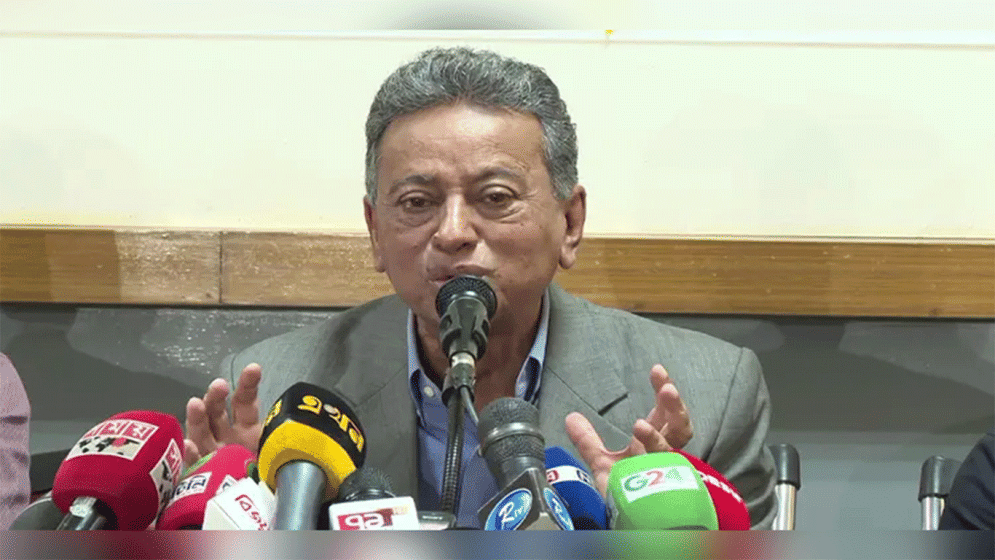
Photo: BSS
Finance Minister Amir Khosru Mahmud Chowdhury on Sunday outlined a comprehensive reform agenda aimed at strengthening fiscal sustainability, improving governance, expanding social protection and accelerating private sector-led growth as part of the national budget implementation strategy.
“The FY2026-27 budget was prepared within a short
timeframe of about one and a half months amid significant fiscal challenges,
including around Tk50,000 crore in outstanding power sector liabilities
inherited by the government,” he said.
The minister made the remarks while speaking as the
chief guest at a post-budget discussion at a hotel in the city.
Centre for Policy Dialogue (CPD) organised the
dialogue.
State Minister for Planning Zonayed Abdur Rahim Saki
attended the event as the special guest while CPD Fellow Prof Mustafizur Rahman
chaired the programme.
Khosru said that the government is undertaking a
major transformation of the country's public finance architecture by reducing
dependence on traditional multilateral financing sources and exploring
alternative funding mechanisms, including market-based financing and bond
issuance.
Noting that the government would have to repay
nearly Tk1.25 lakh crore in debt during the current fiscal year, the minister
stressed the importance of prudent debt management and reducing reliance on
bank borrowing to create greater space for private-sector investment.
The minister highlighted the Family Card programme
as one of the government's flagship social protection initiatives aimed at
empowering women and ensuring transparency in welfare distribution.
He said beneficiary selection under the programme
has been kept completely free from political influence and is based on a Proxy
Means Test (PMT) formula that assesses household assets and living conditions
to identify the most vulnerable families.
To prevent misuse and leakages, financial assistance
is being transferred directly to the accounts of female heads of households,
bypassing intermediaries, he added.
Emphasising the importance of human capital
development, the minister reiterated the government's commitment to gradually
increasing allocations for education and health sectors to 5% of GDP.
He said a growing share of education spending would
be directed toward skill development, vocational education, reskilling and
upskilling initiatives to meet international standards and align workforce
capabilities with labour market demands.
Highlighting the country's growing digital economy,
the minister announced several incentives for startups, freelancers and content
creators.
To improve development project implementation, the
minister said a digital monitoring dashboard would become operational from 1
July, enabling the Prime Minister's Office and Cabinet Division to track
project progress on a daily basis.
The initiative, he said, would help ensure timely
completion of projects, reduce implementation delays and minimise cost
escalations.
The minister also unveiled a comprehensive
deregulation plan aimed at removing administrative and regulatory barriers for
businesses and citizens.
A dedicated website and task force would be established
to receive complaints and address regulatory bottlenecks, he added.
On revenue mobilisation, he stressed the need to
broaden the tax base by bringing more professionals, including doctors, lawyers
and traders, into the tax system.
The objective is to increase the country's
tax-to-GDP ratio through greater inclusion rather than coercive measures, he
said.
To support export diversification and industrial
growth, the minister said duties on industrial raw materials had been reduced
while procedures for obtaining duty-free imported inputs through bank
guarantees and bonded facilities had been simplified.
The minister called upon entrepreneurs and investors
to take advantage of the reforms, saying the government had laid the groundwork
through deregulation and institutional reforms, while the private sector must
now play a leading role in driving economic expansion.
He expressed optimism that the combined efforts of
government and businesses would help Bangladesh achieve its long-term goal of
becoming a trillion-dollar economy.
Among the discussants were National University
Vice-Chancellor Prof ASM Amanullah, Bangladesh Chamber of Industries (BCI)
President Anwar-Ul-Alam Chowdhury Parvez, Research and Policy Integration for
Development (RAPID) Chairman Dr Mohammad A Razzaque, Garments Workers' Trade
Union Centre President Montu Ghosh, Bangladesh Garment Manufacturers and
Exporters Association (BGMEA) President Mahmud Hasan Khan (Babu), and Power and
Participation Research Centre (PPRC) Executive Chairman Dr Hossain Zillur
Rahman.