


 For all latest news, follow the Daily Sun's Google News channel.


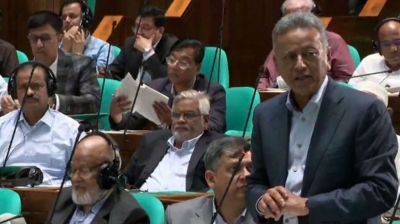
Photo: Collected
A significant gap remains in the development budget, or Annual Development Programme (ADP). The government is set to announce a record development budget of Tk3 trillion for the 2026–27 fiscal year. Of this amount, Tk1.17 trillion has been allocated as lump-sum provisions under various ministries and special development assistance, while Tk1.83 trillion has been earmarked for specific development projects.
Experts say that since these lump-sum allocations are not tied to specific projects, they often remain unused.
According to the Planning Commission, the Awami League government had announced a maximum development budget of Tk2.78 trillion. The interim government reduced that figure to Tk2.30 trillion in the current fiscal year, and in the revised ADP it has been further cut to Tk2.00 trillion.
Only 30 per cent of the total ADP allocation has been spent so far in the current fiscal year. In the previous fiscal year, total expenditure stood at Tk1.53 trillion.
Finance Ministry sources said that for the next fiscal year, Tk60.08 billion has been allocated to ongoing development projects under the Health Services Division, while Tk208 billion has been set aside as a lump-sum allocation for the sector. Similarly, Tk50.48 billion has been allocated for ongoing projects under the Ministry of Primary and Mass Education, alongside a lump-sum allocation of Tk162.99 billion.
The Road Transport and Highways Division has been allocated Tk301.64 billion for projects and Tk139.02 billion as a lump-sum provision. In addition, Tk115 billion has been allocated to the Secondary and Higher Education Division, Tk75.62 billion to the Local Government Division, Tk68 billion to the Health Education and Family Welfare Division, and Tk30.79 billion to the Technical and Madrasa Education Division. A further Tk377.50 billion has been set aside as lump-sum allocations for special development assistance and social development support.
In previous fiscal years, such ministry- or division-based lump-sum allocations were not practised. Typically, Tk50–100 billion was set aside for special development needs. This is the first time such a large amount has been allocated in lump sums.
In the current fiscal year, Tk107.71 billion was kept as a lump-sum allocation for special needs. In FY2024–25, it was Tk63.28 billion, and in FY2023–24, Tk46.96 billion.
Former Planning Division Secretary Mamun Al Rashid said there is a clear contradiction in the formulation of the ADP budget. While the revised ADP for the current fiscal year has been reduced to Tk2.30 trillion, a much larger budget of nearly Tk3 trillion has been proposed for the next fiscal year, which he said is not consistent with reality. Past experience shows that a significant portion of large budgets remains unimplemented, and last year was no exception. With the same manpower and capacity, implementing such an ambitious budget would be difficult, often leading to cuts during revisions.
The Bridges Division had sought Tk25.39 billion in lump-sum allocations for potential projects yet to receive approval, but was allocated Tk21.66 billion. With two major megaprojects—the Padma Bridge and the Karnaphuli Tunnel—already completed and a trend towards expenditure restraint emerging, experts view such large allocations for uncertain projects as risky.
Experts also noted that large lump-sum allocations for unapproved projects tend to reduce transparency in planning and implementation. In many cases, these funds are later reallocated or transferred, indicating inefficiencies in budget management.
Responding to queries, Bridges Division Secretary Mohammad Abdur Rouf said several major projects are currently in the pipeline and are expected to enter the implementation phase soon. Additional funds are needed for preparatory activities, including land acquisition, design work and administrative processes, alongside regular operations. He expressed confidence that the allocated funds would be utilised in the next fiscal year.
Mamun Al Rashid further said that lump-sum allocations are not a good practice, as they are not tied to specific projects. When funds are not earmarked for defined sectors, authorities often look for unnecessary areas to spend the money later.