



 For all latest news, follow the Daily Sun's Google News channel.


Govt plans 150 gas wells, new LNG terminals within two years: Khosru
Minister says energy expansion and economic reforms will restore stability
Daily Sun Report, Dhaka
Published: 20 Oct 2026, 12:00 AM
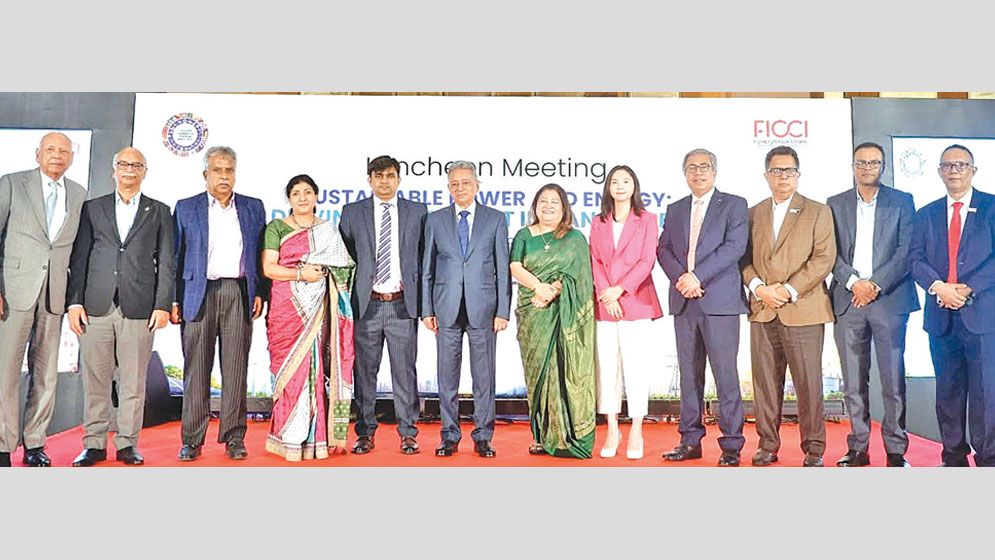
Finance Minister Amir Khosru Mahmud Chowdhury attends a discussion organised by the Foreign Investors’ Chamber of Commerce and Industry (FICCI) in Dhaka on Monday as chief guest. PHOTO: PID
Bangladesh expects to overcome its energy crisis and restore economic stability within the next two years through increased domestic gas production, expanded liquefied natural gas (LNG) infrastructure, solar power development and institutional reforms, Finance and Planning Minister Amir Khosru Mahmud Chowdhury has said.
Speaking as chief guest at a discussion titled “Sustainable Power and Energy: Driving Investment in Bangladesh”, organised by the Foreign Investors’ Chamber of Commerce and Industry (FICCI) on Monday, he said the government needed time to address longstanding economic weaknesses and additional pressures from the Middle East conflict.
“We cannot mislead people by promising that all problems will be solved tomorrow or the day after tomorrow. We need at least two years,” he said.
Under the government’s recovery roadmap, the energy sector and wider economy are expected to stabilise within two years, economic activity to regain momentum in the third year, and recovery to deepen in the fourth and fifth years.
Khosru said energy and electricity had become even more critical following the outbreak of war in the Middle East, which began barely a week after the government took office. The country was already grappling with substantial outstanding liabilities and economic weaknesses inherited from the previous administration.
He also highlighted Bangladesh’s high cost of doing business and poor performance in ease-of-doing-business indicators, blaming an excessively control-oriented system. The government is working to simplify regulations, reduce business costs and make it easier for domestic and foreign investors to operate.
Govt targets 150 gas wells
Increasing domestic gas production is central to reducing dependence on imported fuel. Khosru said Bangladesh had conducted insufficient exploration of its gas resources for around 10 to 15 years, making the revival of onshore and offshore exploration a priority.
The government plans to strengthen Bangladesh Petroleum Exploration and Production Company Limited (BAPEX) and drill 150 gas wells, alongside exploration under production-sharing contracts (PSCs). Approval has also been given to purchase the necessary equipment, while the government is working to finalise PSC agreements to facilitate further exploration and attract investment.
Three to four new LNG terminals planned
Alongside domestic exploration, the government plans to establish three to four additional floating storage and regasification units (FSRUs) to meet gas demand. Private investors from South Korea, China and the United States are expected to participate.
The government has also identified a potential deep-water site near Khulna, alongside existing plans for Matarbari. The proposed facility would accommodate large oil and LNG carriers requiring a draft of around 20 metres and form part of a broader energy hub to improve fuel handling and supply infrastructure. Solar power gets tax incentives
The government aims to generate at least 10 gigawatts of solar electricity and has introduced tax exemptions and other incentives for solar infrastructure.
Households and industrial establishments are being encouraged to install rooftop solar panels, with arrangements to purchase surplus electricity at rates higher than the normal tariff. The measures aim to make solar investments more attractive, encourage private participation and ease the country’s energy shortage.
NBR to be split into two bodies
The government is dividing the National Board of Revenue (NBR) into two separate organisations, one responsible for tax policy formulation and the other for implementation.
Khosru described the move as a major reform pursued despite various obstacles. Separating the functions is intended to reduce conflicts of interest, curb corruption and improve transparency and efficiency in revenue collection.
Simplifying business regulations and reducing unnecessary administrative controls are also part of the broader effort to improve the investment climate.
Banking, capital market reforms underway
Khosru said Bangladesh’s banking sector and capital market had suffered severe damage amid longstanding financial weaknesses and allegations of large-scale capital flight. He cited an estimated US$235 billion allegedly siphoned out of the country as a factor contributing to the deterioration.
The government is working to restructure both sectors and restore investor confidence. Khosru said the banking sector was showing signs of recovery, with positive signals also emerging from the capital market.
To attract foreign investment, a dedicated equity investment fund for Bangladesh is being established in Hong Kong’s capital market, offering international investors another channel to invest in local equities.
He also referred to a recent meeting in New York between Prime Minister Tarique Rahman and 16 leading global investors from Wall Street. Representatives of funds managing around $36 trillion in assets attended the meeting and expressed interest in investing in Bangladesh’s banking sector, bond market and capital market.