


 For all latest news, follow the Daily Sun's Google News channel.


Renewable energy projects must avoid use of agri lands: Experts
They call for a decentralised transition amid risk of economic strain
Daily Sun Report, Dhaka
Published: 31 Mar 2026, 12:00 AM
Energy experts and policymakers have warned that Bangladesh’s economy is under severe strain due to its ongoing energy crisis, describing the situation as “economic bleeding” driven by import dependence and structural inefficiencies.
The remarks came during a roundtable titled “From Dependence to Sovereignty: Renewable Energy Investment Roadmap for a Just Transition” held in Dhaka, organised by Change Initiative. Speakers stressed that the country needs urgent, strict, and practical measures to address the deepening energy challenge.
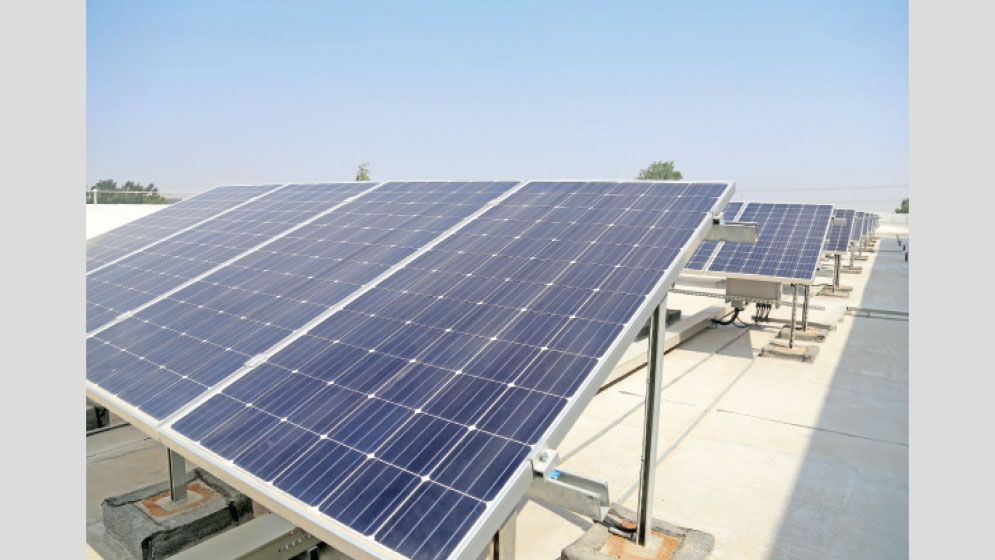
Participants noted that Bangladesh has strong potential to generate more than 10,000 MW of renewable electricity without using agricultural land. Instead, they emphasised using unused water bodies, industrial rooftops, and irrigation systems as key sites for solar expansion.
They also highlighted long-standing concerns over governance in the energy sector, including allegations of corruption and inefficiency. Several speakers argued that these issues must be investigated to understand why past investments and initiatives have failed to deliver expected results.
A major concern raised during the discussion was the financial structure of the renewable energy market. Experts said nearly 90% of renewable energy investments are currently debt-driven, leaving the sector vulnerable to currency fluctuations and financing risks. Speakers also challenged the idea that renewable energy projects must rely on agricultural land, calling it a misconception. They argued instead for a fully decentralised energy model that integrates power generation directly into consumption points, particularly in industrial zones and rural irrigation systems.
According to research presented at the event, Bangladesh’s industrial rooftops alone offer around 40 million square feet of usable space, which could generate approximately 4,000 MW of electricity if properly utilised. This could help industries meet their own demand while feeding surplus power into the national grid.
Director General of the Bangladesh Institute of Development Studies (BIDS), Dr AK Enamul Haque, said Bangladesh has struggled to translate installed renewable capacity into actual generation due to inefficiencies in maintenance, governance gaps, and weak coordination. He also questioned the performance of past solar and wind initiatives, pointing to underutilisation of capacity and failed pilot projects.
He further noted that several earlier renewable energy investments, including domestic solar programmes, declined rapidly after initial success, raising concerns about sustainability and policy consistency.
Speakers also criticised decision-making under what they described as a “talk-heavy but action-poor” governance culture, arguing that political discussions often fail to translate into implementation on the ground.
From the private sector, Nure Alam, chief operating officer of Renewable Energy at RFL Group, said the company is working to add new capacity in the coming years, including a 100 MW solar project under a commercial power policy framework. He added that firms are increasingly exploring captive solar solutions to reduce dependence on the national grid.
M Zakir Hossain Khan, research lead of Change Initiative, said Bangladesh must diversify its financing sources beyond traditional loans. He emphasised the need to tap underutilised mechanisms such as climate investment funds, diaspora financing, and innovative green financial instruments to scale renewable energy investment.
He also argued that climate finance must prioritise vulnerable communities, particularly in coastal and rural regions, where access to energy remains limited.