


 For all latest news, follow the Daily Sun's Google News channel.


‘Ensuring steady cash flow key to attracting renewable investment’
Daily Sun Report, Dhaka
Published: 02 Dec 2025, 12:00 AM
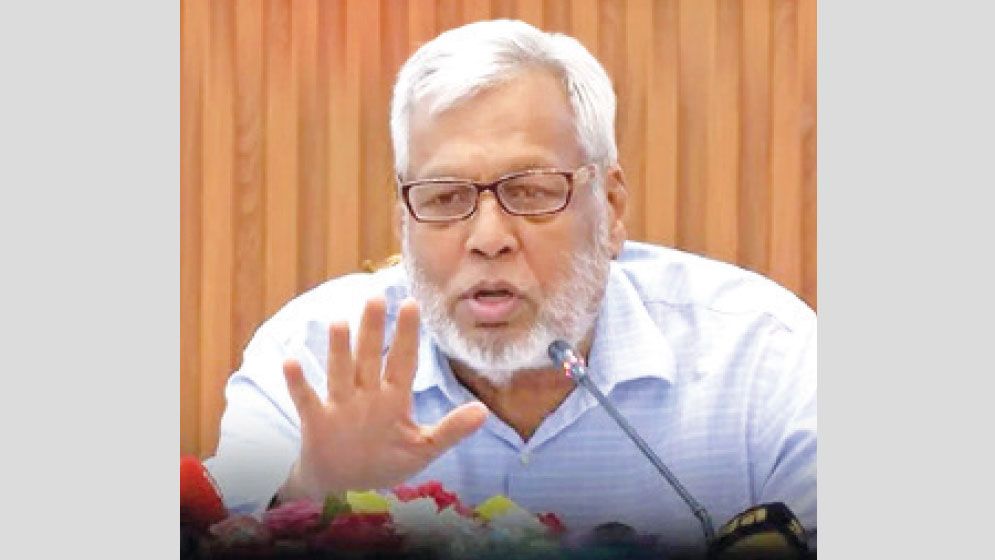
Power, Energy and Mineral Resources Adviser Dr Muhammad Fouzul Kabir Khan on Monday said Bangladesh must ensure stable, predictable cash flow to attract large-scale renewable energy investment.
Speaking at an online dialogue organised by the Centre for Policy Dialogue (CPD), he defended the government’s recent cancellation of Implementation Agreements (IAs) for 34 solar projects, calling the decades-old framework “outdated” and ineffective.
“The Implementation Agreement is cheaper than the paper it is written on. Nobody ever demanded to invoke it,” he said. “For an investor, it is cash flow, cash flow and cash flow.”
Shift to new procurement and financing model
Dr Fouzul said the government is moving to direct procurement and involving domestic banks, financial institutions and IDCOL to improve project bankability. The banking division, he added, has already been advised to support access to guarantee schemes.
He criticised past reliance on unsolicited power deals, which he said created a “vicious cycle” of high tariffs and unpaid bills. The interim government has cleared US$3.2 billion in outstanding energy import bills to avoid penalties and supply disruption. New solar proposals with much lower tariffs have since been submitted to the purchase committee.
“We are trying to transition from a corrupt process and move beyond the 2010 Power and Energy Act,” he said.
Land, finance, governance still major hurdles
Developers cited land acquisition as the biggest obstacle, taking an average of 15 months out of the 24-month implementation period. Access to finance was also a serious challenge, with over half of domestic and joint-venture firms reporting difficulty securing credit.
CPD recommended re-tendering packages with single or zero bids, splitting large projects, lowering working capital requirements, full digitalisation of procurement, live reverse auctions, single-window approvals, and a renewable financing fund with concessional loans.
Australia calls for evidence-based reform
Clinton Pobke, deputy head of mission at the Australian High Commission, praised Bangladesh’s reform momentum and said evidence-driven policymaking is essential for reliable, affordable power. He highlighted Australia’s support for research, policy development and private-sector engagement.
“If Bangladesh gets these policies right, that means additional GDP points, additional livelihoods, and better environmental outcomes,” he said.
Investors emphasise need for guarantees and bankability
Imran Karim, former president of BIPPA, welcomed greater transparency but said key investor safeguards are missing. He warned that removing IAs leaves developers exposed to payment risks given BPDB’s weak finances. Without government-backed guarantees, long-term contracts resemble commercial lending rather than project finance.
He also pointed to persistent land issues, the lack of standardised bankable contracts under PPR, and declining investor confidence after cancelled Letters of Intent.
Han Kun, representing Chinese investors, noted that Chinese companies now account for over one-third of Bangladesh’s installed capacity, yet renewables contribute less than 3%, far behind regional peers. Without credible guarantees—covering payment security, currency risk and performance obligations—Bangladesh will struggle to attract foreign investment, he said, citing Vietnam and Cambodia’s successful use of structured guarantees.