


 For all latest news, follow the Daily Sun's Google News channel.


Mintoo urges integration of waste management into climate action
Daily Sun Report, Dhaka
Published: 14 Nov 2026, 11:24 AM
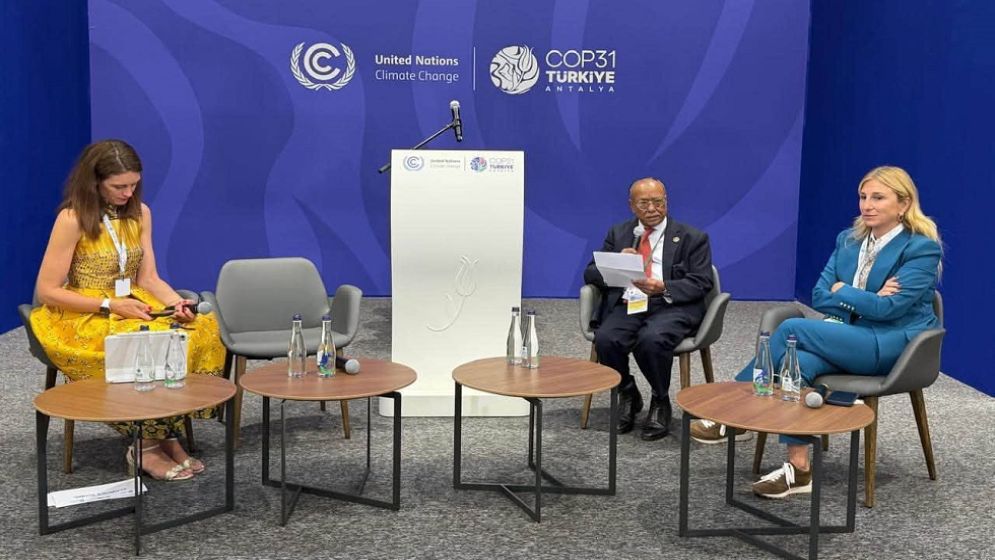
Bangladesh calls for global financing for sustainable waste management. Photo: Ministry
Environment, Forest and Climate Change Minister Abdul Awal Mintoo has called for making waste management and resource reuse integral to climate action, saying they are essential to strengthening climate resilience, protecting public health and promoting sustainable economic development.
He made the call while speaking at a high-level panel discussion titled “Can Growth Outrun Waste?”, organised by the World Economic Forum (WEF) in the Blue Zone of the 31st Conference of the Parties (COP31) to the United Nations Framework Convention on Climate Change in Antalya, Turkiye, on Friday. The remarks were conveyed in a message received here on Saturday.
Mintoo said the circular economy was not merely an environmental conservation issue for climate-vulnerable countries such as Bangladesh. It also offered an important way to build resilience, create jobs and support sustainable economic growth.
He stressed the need for international financing, modern technology and coordinated support from development partners to bring meaningful changes to the waste management sector.
More than 100 billion tonnes of materials and resources are consumed worldwide every year, but less than 10 per cent are brought back into use, he said. This imbalance in production and consumption is putting growing pressure on the environment and wasting valuable resources.
The circular economy, he added, could help address these challenges while opening up new opportunities for investment and employment.
Highlighting Bangladesh's vulnerability to climate change, Mintoo said drainage systems and waste disposal facilities were often among the first infrastructure to be affected during floods, with direct consequences for public health, the environment and people's livelihoods.
Waste management, therefore, should not be treated as a separate issue but as an essential part of climate adaptation and resilience-building in Bangladesh, he said.
The minister said Bangladesh had already formulated a 3R (Reduce, Reuse and Recycle) Strategy and Solid Waste Management Rules to encourage waste reduction, reuse and recycling.
An Extended Producer Responsibility (EPR) framework had also been developed for plastic waste, while a similar mechanism for used lead-acid batteries was under development, he added.
He further said the Department of Environment, in collaboration with the United Nations Industrial Development Organization (UNIDO), had established a common treatment facility for medical waste in Sirajganj.
The initiative had demonstrated that waste could be managed in an environmentally sound and economically viable way, and the government was looking to expand similar projects in the future, he said.
Mintoo said the government's election manifesto included a commitment to adopting a circular economy-based development model. Under this approach, the government planned to attract investment in the management of solid, medical, textile and electronic waste.
Plans were also under way to establish Material Recovery Facilities (MRFs) across the country to separate and recover recyclable materials, alongside an e-waste recycling facility in every administrative division, he said.
The minister stressed that climate resilience must be a key consideration when developing waste management infrastructure.
“Infrastructure capable of withstanding floods, cyclones and other climate-related disasters is essential. Waste management facilities that become submerged during the monsoon season cannot be considered sustainable or climate-resilient infrastructure,” he said.
On international cooperation to tackle plastic pollution, Mintoo said Bangladesh was implementing the National Plastic Action Partnership (NPAP) under a memorandum of understanding with the Global Plastic Action Partnership (GPAP).
While the partnership initially focused on assessing plastic waste and preparing an action plan, the government was now considering a broader and more coordinated approach, he said.
A public-private steering group involving representatives from the government, industry and development partners was planned to coordinate initiatives, prevent duplication and identify and address implementation challenges at an early stage.
Mintoo also pointed to ongoing negotiations on an international treaty to tackle plastic pollution, which are increasingly focusing on product design and chemicals of concern.
He said Bangladesh needed to increase investment in resource efficiency, cleaner production and environmentally sustainable product design in preparation for future global decisions. The country's plastic industry policy was also moving in this direction.
Calling for greater international financial support, the minister proposed setting up a dedicated global investment platform for waste management, similar to the Climate Investment Funds established to support clean energy investment.
Such a platform should give priority to preventing waste, followed by recovering resources, he said.
Bangladesh needed technical assistance, financing and effective international partnerships to establish sustainable waste management systems and advance the circular economy, Mintoo said, adding that the country was ready to work with the international community, development partners and the private sector.
The WEF-organised discussion focused on improving industrial competitiveness through the circular economy, increasing resource efficiency, reducing waste, creating green jobs and strengthening public-private partnerships.
Clemence Schmid, Director of Circular Economy Transformation and Global Plastic Action Partnership at the WEF, moderated the discussion.
Dr Heike Henn, State Secretary at Germany's Federal Ministry of the Environment, Climate Action, Nature Conservation and Nuclear Safety, and representatives from relevant sectors also took part.