



 For all latest news, follow the Daily Sun's Google News channel.


Power crisis disrupts rice production in Kushtia
The disruption caused by the electricity shortage is a reality, but it cannot automatically be treated as the sole reason for increasing rice prices
Amanur Aman, Kushtia
Published: 13 Aug 2026, 07:49 PM
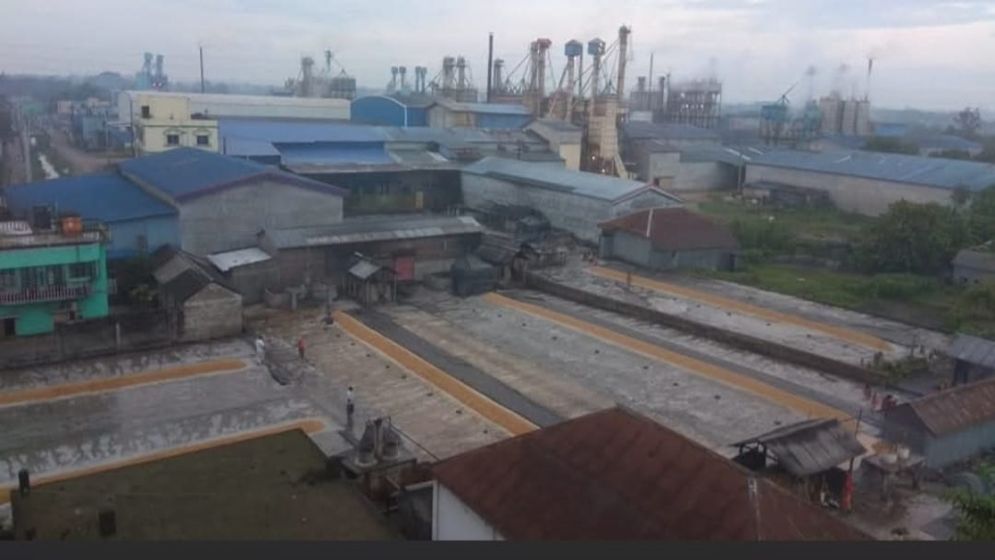
Photo: Daily Sun
The continued power shortages have disrupted production at rice mills in Khazanagar, one of the country’s major rice-processing hubs located in Kushtia.
Around 250 small, medium and large rice-processing
units in the area receive electricity from both Bangladesh Power Development
Board (BPDB) and Bangladesh Rural Electrification Board (Palli Bidyut).
Mill owners say the situation is particularly
difficult for mills under Palli Bidyut, which are reportedly receiving
electricity for only five to six hours a day. The frequent outages are
disrupting production, forcing millers to operate generators to keep their
plants running.
At the same time, workers have to be paid even when
production remains suspended.
Millers fear that the disruption will soon put
upward pressure on rice prices.
However, there is considerable variation in the
millers’ estimates of production losses. While some claim output has fallen by
60%–65%, others put the decline at around 38%-40%. As no consolidated data on
production across Khazanagar is available, it is difficult to establish that
the area’s overall rice production has fallen by as much as two-thirds.
Despite this uncertainty, concerns are growing that
rice prices could be raised at any time, citing the power crisis as a reason.
According to Kushtia Palli Bidyut Samity,
electricity supply to the district has remained significantly below demand over
the past two to three weeks, resulting in scheduled load-shedding in different
areas. The power-dependent industrial hub of Khazanagar has also been affected.
A visit to Khazanagar and adjoining areas found
workers at several mills waiting for electricity to resume. Some mills were
using generators as an alternative source of power. While this has allowed
production to continue partially, the additional diesel cost is increasing
operating expenses.
Mill operators also said interruptions during
different stages of paddy processing were affecting production.
Abdus Samad, proprietor of Swarna Auto Rice Mill in
Ballavpur, adjacent to Khazanagar, said his mill normally produces around 90
tonnes of rice a day. Even after using a generator, production has fallen to no
more than 30 tonnes a day, he claimed.
“Workers come to the mill but have to wait because
there is no electricity. We still have to pay their wages even when there is no
production. On top of that, we are incurring additional costs for diesel to run
the generator,” he said.
However, the extent of production losses varies from
one mill to another.
Jihaduzzaman Ziku, owner of Golden Rice Mill, said
production at his mill had declined by 60%–65% in recent days. He said
interruptions during processing could also damage paddy remaining inside the
machinery.
Meanwhile, Abdul Khaleque, managing director of Desh
Agro Ltd, estimated the production disruption at around 38%–40%.
The varying estimates indicate that the power crisis
is genuinely affecting rice milling in Khazanagar, but there is no reliable
consolidated assessment of the overall production loss in the market.
Khazanagar has rice mills of different sizes and
production capacities, and not all of them depend on the same electricity
supply system. Therefore, applying the production-loss figures of one or two
large mills to the entire rice hub would not necessarily provide an accurate
picture.
The disruption is also affecting transportation. A
truck driver who had brought paddy from Naogaon said he had to wait for a long
time to unload his truck because of the slowdown in mill operations. Such
delays are reducing the turnaround of vehicles and disrupting the supply chain.
Some traders and millers are meanwhile warning that
the power shortage could push up both production costs and rice prices.
However, the extent to which electricity shortages have actually increased
production costs, and how much of that additional cost can reasonably be
reflected in rice prices, requires separate assessment.
The impact of the power crisis on rice prices cannot
be determined solely from millers’ statements. Paddy prices, stock levels,
labour costs, fuel expenses, actual production volumes and changes in mill-gate
and wholesale rice prices also need to be considered.
The disruption caused by the electricity shortage is
a reality, but it cannot automatically be treated as the sole reason for increasing
rice prices. Particularly when millers themselves are providing widely
different estimates of production losses, the actual shortfall and additional
production costs should be verified before any price increase is justified on
the grounds of the power crisis.
Mohammad Jahangir Alam, deputy general manager (DGM)
of Kushtia Palli Bidyut Samity, said the district’s electricity demand was
around 180 megawatts. Over the past two to three weeks, the district had
received only 40%–50% of its demand, he said. However, supply had improved to
135 MW the previous evening.
Regarding the situation, Kushtia Deputy Commissioner
Touhid Bin-Hasan said discussions had been held to ensure uninterrupted
electricity supply to rice mills.
“We are trying to take prompt measures so that rice
production does not face major disruption,” he said.
Khazanagar is one of the country’s major rice
markets and processing hubs. Any significant change in production and supply
there could therefore affect markets beyond Kushtia. But the key questions at
present are how much production has actually been lost due to the power crisis
and how much additional cost the mills are incurring.
Without verified mill-level data on production and
costs, accepting claims of a major production shortfall–or using such claims as
the basis for raising rice prices–could obscure the actual market situation.