


 For all latest news, follow the Daily Sun's Google News channel.


98% of energy budget still for fossil fuels: Experts
Bangladesh needs Tk21,750cr annually to achieve its 2030 renewable energy target, say civil society groups
Daily Sun Report, Dhaka
Published: 21 Jun 2026, 05:21 PM

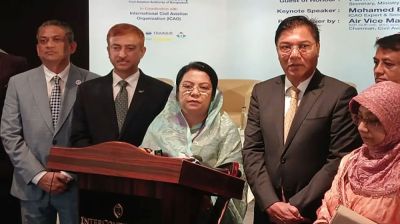
Photo: Daily Sun
Leading civil society organisations on Sunday expressed concern that Bangladesh's energy budget remains heavily dependent on fossil fuels, warning that the country risks missing its renewable energy targets without significantly increasing investment in the sector.
Speaking at a press conference titled “Energy Sector
in the National Budget: Civil Society Perspectives” at Green Lounge in Dhaka,
representatives of several organisations said nearly 98% of the country’s
energy budget continues to favour fossil fuels, while renewable energy receives
only a marginal share.
The event was jointly organised by the Coastal
Livelihood and Environmental Action Network (CLEAN) and the Bangladesh Working
Group on Ecology and Development (BWGED), with support from the Bangladesh
Environmental Lawyers Association (BELA), Ethical Trading Initiative (ETI)
Bangladesh and Manusher Jonno Foundation (MJF).
Presenting the keynote paper, Hasan Mehedi, chief
executive of CLEAN and member secretary of BWGED, said Bangladesh requires at
least Tk21,750 crore annually to achieve its renewable energy targets by 2030,
including a minimum public investment of Tk6,750 crore every year.
According to the organisations, although the
government has allocated Tk17,193 crore for the power and energy sector in the
FY2026-27 budget, only Tk379.24 crore, or 2.2%, has been earmarked for
renewable energy.
The groups welcomed the government’s decision to
exempt import duties, Value Added Tax (VAT) and Advance Income Tax (AIT) on
renewable energy equipment, particularly solar technologies. They said the move
could reduce rooftop solar installation costs by 30-37%, making clean energy
more affordable for households, businesses and farmers.
However, they expressed concern over a National
Board of Revenue (NBR) Statutory Regulatory Order (SRO) issued on 8 June,
arguing that it may prevent millions of residential consumers, farmers and
small entrepreneurs from benefiting from the tax exemptions.
“While the government has taken a bold step toward
expanding renewable energy, the NBR's restrictive SRO risks becoming a major
obstacle to that transition. The benefits must be available to all citizens,
not only a handful of large corporate developers,” Hasan Mehedi said.
Civil society representatives also criticised what
they described as contradictory policies that continue to favour fossil fuels.
They noted that tax exemptions for LNG imports remain in place, while
incentives for coal imports and fossil-fuel infrastructure expansion have also
been extended.
Syeda Rizwana Hasan of BELA said renewable energy
targets must be supported by adequate budget allocations and effective
implementation measures.
Munir Uddin Shamim, director of ETI Bangladesh,
stressed the need for an inclusive energy transition, while Monowar Mostofa, networking
adviser of CLEAN, called for removing policy barriers that hinder renewable
energy expansion.
The organisations recommended revoking the NBR SRO,
establishing a Tk25,000 crore Renewable Energy Fund, introducing subsidies for
rooftop solar systems, operationalising Corporate Power Purchase Agreements and
imposing emissions taxes on fossil-fuel-based industries.
They warned that Bangladesh now stands at a critical
juncture, where policy choices made today will determine the country's future
energy security, economic resilience and climate commitments.