


 For all latest news, follow the Daily Sun's Google News channel.


Bangladesh faces grave risk due to India’s unilateral withdrawal of shared waters: Fakhrul
Daily Sun Report, Dhaka
Published: 15 May 2026, 10:16 PM
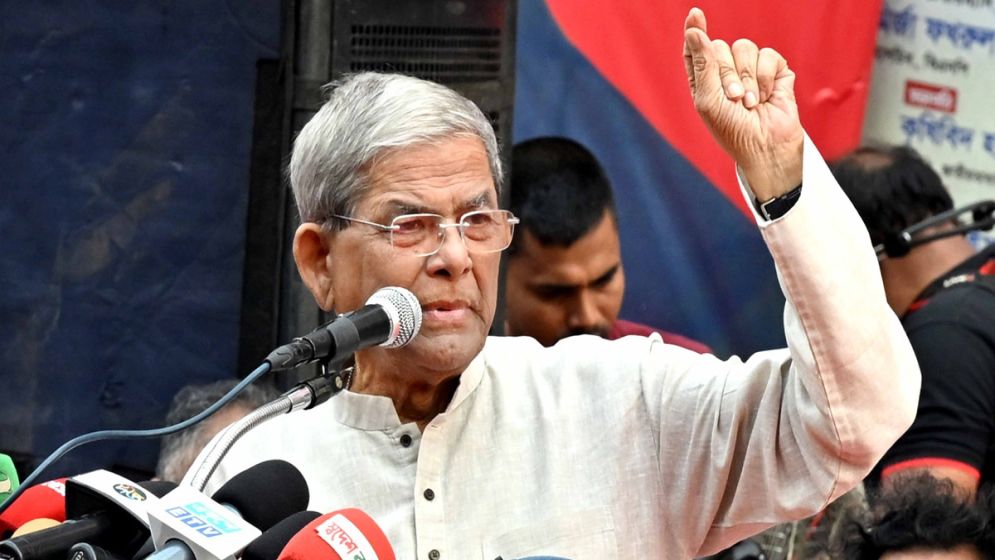
Photo: Collected
Bangladesh is
increasingly facing an existential threat as India keeps withdrawing water from
transboundary rivers unilaterally and without any regard for international
laws, said rural government minister Mirza Fakhrul Islam Alamgir on Friday.
Signs of gradual
desertification are emerging in many parts of the country as India continues to
construct dams on many of the 54 shared rivers, said the BNP secretary general
in a statement issued marking the anniversary of the Farakka Day.
He put the blame
on the Awami League government, the first since independence, for initiating
the crisis by greenlighting India’s Farakka dam project on the transboundary
Ganges river.
On 16 May
1976, Maulana Abdul Hamid Khan Bhashani, the undisputed leader of the masses,
called a long march towards Farakka, demanding Bangladesh’s fair share in the
Ganges river in line with international law, Fakhrul said.
Responding to
the call, hundreds of thousands of people from across the country joined the march,
he noted.
Nearly five
decades since the march, the unilateral withdrawal of river water is causing
ecological imbalance, water scarcity and negative impact on biodiversity in northwestern
Bangladesh, Fakhrul said.
Initially,
India wanted to operate the Farakka dam on Ganges river experimentally for a
few days. The then Awami League government gave permission, ignoring the public
opinion.
However,
the dam continues to operate to this day, turning into a “death trap,” Fakhrul
said.