


 For all latest news, follow the Daily Sun's Google News channel.


Patients lured by brokers as irregularities plague Mugda Medical College Hospital
♦ Most tests are referred to external centres ♦ Numerous substandard clinics have sprung up around the hospital ♦ High patient load, shortage of doctors ♦ Surgical medicines are not available ♦ Beds are secured through unofficial payments ♦ Unsanitary environment
Daily Sun Report, Dhaka
Published: 26 Apr 2026, 09:08 AM
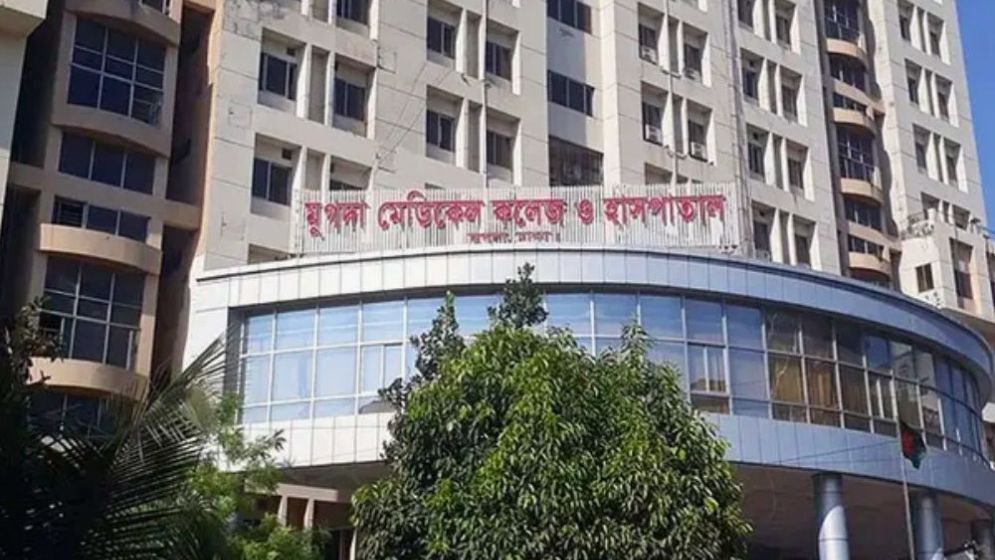
Photo: Collected
Bilal Hossain steps out of the hospital clutching a doctor’s prescription. No sooner has he reached the ground floor than he is approached by a man named Md Miraj, a representative (middleman) of a little-known Insight Diagnostic and Consultation Centre. Miraj surrounds him with offers, promising to arrange the prescribed tests at low cost and with various incentives. Eventually, Bilal agrees. This is a daily scene at the 500-bed Mugda Medical College Hospital in the capital, where on-the-spot visits reveal alarming levels of irregularities and corruption.
Speaking to this reporter, Bilal said the outpatient doctor had prescribed ten tests. Of these, he completed seven within the hospital, while staff from the pathological department advised him to have the remaining three done outside. “I am going to get those tests done now,” he said.
He added that a hospital employee named Mamun introduced him to the broker, saying, “This brother can arrange the tests quickly and at a lower cost. You can contact him and get them done, so you can show the reports to the doctor.”
Another patient, Salim Uddin, shared a similar experience. He said his wife, Yasmin, had been admitted for five days and was recently prescribed several new tests from the counter. “One iron profile test was circled in red ink, indicating it should be done outside,” he said. “When I came down from the ninth floor with the prescription, a man handed me a card, offering discounts on tests. But I did not proceed.”
Enquiries reveal that this network involves hundreds of men and women who move across different floors of the hospital, identifying patients from their prescriptions and assuring them of cheaper tests. Not only Bilal and Salim, but hundreds of patients are reportedly taken by these middlemen, often in collusion with hospital staff, to obscure diagnostic centres outside. The syndicate earns substantial commissions in the process.
Doctors often request repeat tests due to poor-quality reports from these centres, or prescribe treatments based on unreliable results. This not only increases patients’ financial burden but also poses health risks.
As one of the major hospitals in the capital, Mugda Medical College Hospital attracts hundreds of patients daily from rural and suburban areas. However, vulnerable patients are being lured to private clinics under the guise of better treatment by a powerful network, effectively exploiting them. The public healthcare facility has increasingly become synonymous with mismanagement and malpractice.
Proliferation of Substandard Diagnostic Centres
Numerous unregulated diagnostic centres have sprung up in front of the hospital, operating with outdated equipment and minimal staff. Among them are Seba Diagnostic and Blood Bank Transfusion Centre, Insight Diagnostic Centre, Zamzam Diagnostic Centre, Sun Diagnostic Centre, Medicus Diagnostic and Consultation Centre, Al Aqsa Blood Bank Transfusion Centre, Mugda Diagnostic and Imaging Centre, Primet Diagnostic Centre (21 North Mugda), and Rainbow Physiotherapy Centre—altogether more than 20 such establishments.
Shortage of Doctors
Despite thousands of patients seeking care daily, the number of doctors remains inadequate. Taking advantage of this shortage, hospital staff have reportedly overstepped their roles. In the emergency department, ward boys and ayas were seen checking patients’ blood pressure and pulse in place of doctors. In some cases, they even dispense medicines based on prescriptions in the absence of physicians.
An intern doctor, speaking on condition of anonymity, said, “The dominance of fourth-class employees often makes it difficult for us to perform our duties.”
Patients Forced to Buy Surgical Supplies
Although most surgical medicines and equipment are meant to be provided free of charge in government hospitals, the reality at Mugda Hospital is starkly different. Particularly in the surgery and orthopaedics departments, patients are handed long lists of items to purchase. Cotton, bandages, gauze, saline, and even sutures must be bought from outside shops.
Patients allege that despite sufficient stock in the hospital store, staff refuse to provide supplies and instead direct them to specific external shops, from which they receive commissions. As a result, many who come expecting free operations end up spending thousands of taka.
Bed Trade and Unsanitary Conditions
Securing a hospital bed is another major struggle. Allegations suggest that no bed is allocated without payment or “tips”. Critically ill patients on trolleys are left waiting in corridors until staff are appeased. These unofficial payments reportedly range from Tk200 to Tk500. Even after paying, patients often face appalling conditions.
Hospital Authority Responds
When asked, Deputy Director of Mugda Hospital, Dr Md Nurul Islam, acknowledged the presence of marketing representatives (brokers) from various centres. “I will not deny it,” he said. “However, our personnel are monitoring the situation inside the hospital, and we are maintaining maximum strictness.”
He added that activities outside the hospital premises, including diagnostic centres and those who take patients there, fall beyond the hospital’s jurisdiction and should be overseen by relevant government authorities. “If any of our staff are found involved, legal action will be taken upon proof,” he said.
Regarding the purchase of surgical supplies from outside, he noted that government provisions are often insufficient compared to demand. “In cases of shortage of specific equipment or emergency medicines, patients’ relatives are requested to arrange them. However, sending patients outside when supplies are available in the store is an offence.”
He further stated that although the hospital has a capacity of 500 beds, it often serves up to 1,000 patients. “There is a significant shortage of manpower according to the approved structure. We are trying to increase both staffing and financial allocations,” he added.