


 For all latest news, follow the Daily Sun's Google News channel.


Parliament cancels ordinances on SC judge appointments, separate Secretariat
Following the debates, both repeal bills were passed by voice vote
Daily Sun Report, Dhaka
Published: 09 Apr 2026, 07:10 PM
File Photo
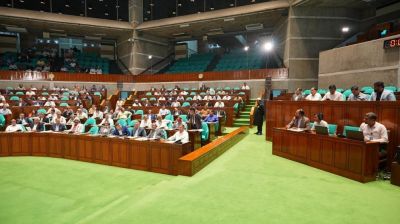
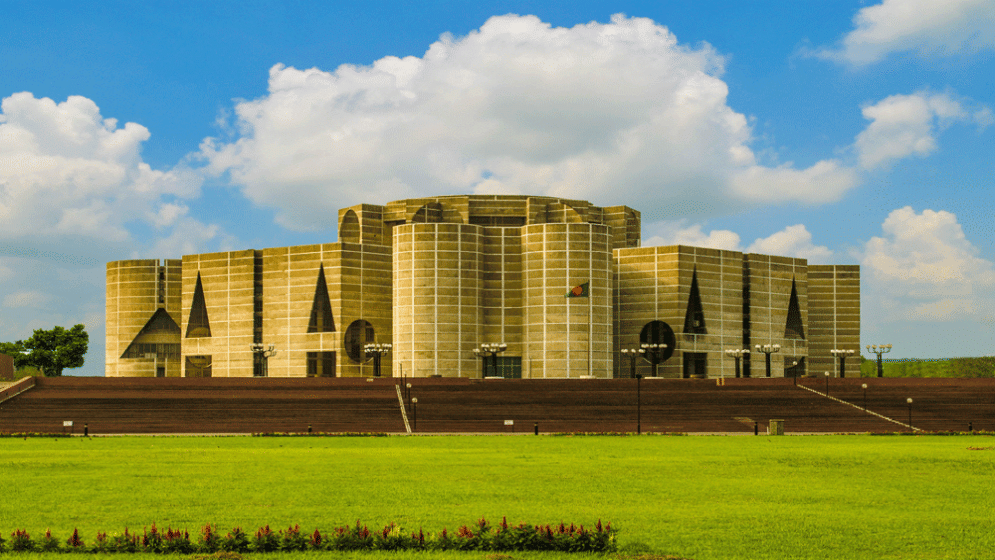
The Jatiya Sangsad on Thursday passed two bills scrapping ordinances issued during the interim government regarding the appointment of Supreme Court judges and the establishment of a separate Supreme Court Secretariat, despite strong objections from the opposition.
The bills—Supreme Court Judges Appointment (Repeal)
Bill and Supreme Court Secretariat (Repeal) Bill—were passed by voice vote
after opposition protests were rejected.
As a result, three related ordinances issued earlier
will be repealed, effectively restoring the judiciary to its previous
framework. Although the ordinances will be annulled, the appointment of 25
judges and other actions already taken under those provisions will remain
legally valid.
With the repeal of the ordinances related to the
Supreme Court Secretariat, the separate secretariat established under those
provisions will be dissolved. Its budget, ongoing projects and programmes will
be transferred to the Ministry of Law, Justice and Parliamentary Affairs. Positions
created under the secretariat will also be abolished, while judicial officers
working there will return to their previous administrative structure under the
earlier legal framework.
The bills will become law after receiving
presidential assent and subsequent gazette notification by the government.
Opposition terms move interference in judicial
independence
Opposition lawmakers strongly criticised the move,
calling it a direct interference in the independence of the judiciary. They
alleged the government was attempting to re-establish political influence over
lower courts and undermine judicial autonomy.
Law Minister Md Asaduzzaman, however, said the
government remains committed to ensuring full judicial independence and plans
to enact a more comprehensive law on the matter after further review and
consultation.
Background to the reforms
Under Article 95 of the Constitution, the President
appoints Supreme Court judges in consultation with the chief justice. However,
Article 48(3) states that the President acts on the advice of the Prime
Minister in most matters, except in specific cases.
The interim government introduced an ordinance in
2025 establishing a Supreme Judicial Appointment Council, led by the chief justice,
to recommend suitable candidates for appointment to the Appellate and High
Court divisions. With the repeal of the ordinance, this provision will no
longer remain in effect and appointments will revert to the earlier
constitutional process.
Similarly, another ordinance had established a
separate Supreme Court Secretariat to oversee administrative functions of
subordinate courts and tribunals, including postings, promotions, transfers,
discipline and leave of judicial officers. These provisions also cease to exist
following the passage of the repeal bill.
Heated debate in Parliament
During the debate, opposition MP Najibur Rahman
argued that the repeal bill was unconstitutional and undermined judicial
independence. He proposed sending the bill for public opinion review and
questioned why the government was backing away from earlier reform commitments.
Responding to the criticism, the law minister said
Parliament has the authority to legislate and that courts cannot dictate
lawmaking. He also claimed that although the judiciary enjoys constitutional
independence, there have been instances of its misuse in the past.
He reiterated that the government intends to ensure
transparency, accountability and merit-based judicial appointments through
future legal reforms after consultations with relevant stakeholders.
Another opposition lawmaker, Akhtar Hossain, also
opposed the repeal of the judge appointment ordinance, arguing that it had
introduced important safeguards for transparency in judicial recruitment.
In response, the law minister said he agreed in
principle with the need for transparent appointments and assured Parliament
that the government would take fresh initiatives to improve the process through
new legislation.
Following the debates, both repeal bills were passed
by voice vote.
At the end of the session, Speaker Hafiz Uddin Ahmed
informed the House that an objectionable adjective used alongside a judge’s
name during the discussion had been ordered to be expunged from the
parliamentary record.