


 For all latest news, follow the Daily Sun's Google News channel.


Dhaka records highest drug use, Barishal the lowest
Daily Sun Report, Dhaka
Published: 26 Jan 2026, 12:02 PM
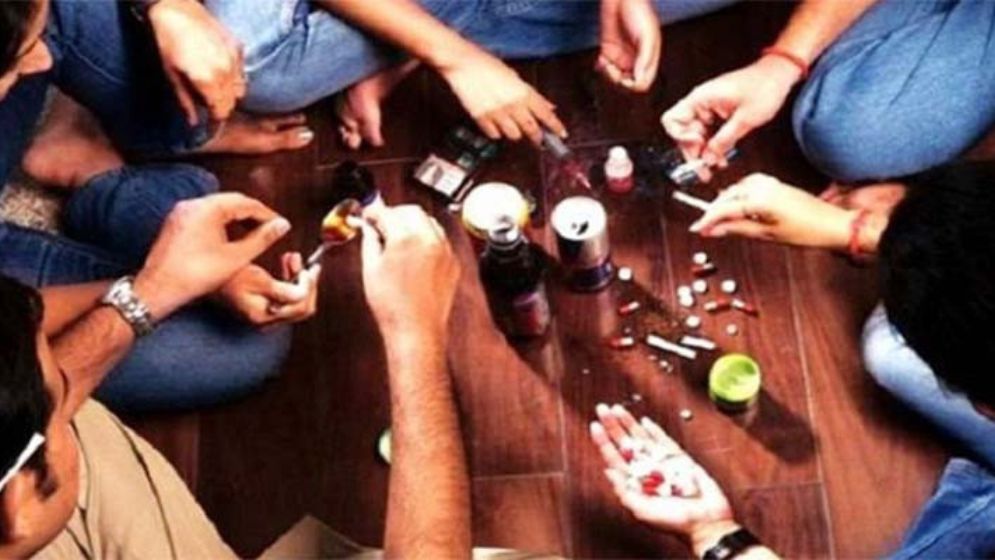
Photo: Collected
More than 60 per cent of drug users in the country take drugs for the first time before the age of 18. Peer influence plays a major role in initiating drug use. At present, the number of drug users in Bangladesh stands at around 8.2 million. This alarming picture has emerged from a national study on drug abuse in the country.
The study was funded by the Department of Narcotics Control (DNC) and jointly conducted by Bangladesh Medical University (BMU) and Research and Management Consultant Limited. According to the findings, the highest number of drug users is in the Dhaka Division, while the lowest is in the Barishal Division. Researchers warned that drug use is rising at an alarming rate among adolescents as well as young people.
The study did not include cigarette smoking as a form of drug use.
The findings were presented on Sunday at the BMU Super Specialised Hospital conference hall during the publication event of the study titled “Number, Types and Associated Causes of Drug Abusers in Bangladesh”. Data were collected from 5,280 respondents across 13 districts and 26 upazilas in all eight divisions of the country, using both quantitative and qualitative methods.
According to the study, the current number of drug users in Bangladesh is approximately 8.2 million, accounting for about 4.88 per cent of the total population. A large proportion of them are young. The research highlights that drug abuse is no longer only a law-and-order issue but has become a major public health problem.
Experts cautioned that unless equal importance is given to prevention, treatment, rehabilitation and social reintegration, the crisis will deepen further. They said the study’s findings and the proposed rehabilitation centres could help shape an effective and evidence-based national drug control policy.
The study’s principal investigator, Professor Dr Saif Ullah Munshi, Dean of Bangladesh Medical University, said: “Cannabis is the most commonly used drug in the country. It is followed by yaba, heroin, phensedyl and codeine-based cough syrups.”
He added: “The number of people using injectable drugs is increasing at an alarming rate, creating serious risks of the spread of infectious diseases such as HIV and hepatitis. This has now become a major public health concern.”
The study found that although drug use is relatively higher in urban areas, it is spreading rapidly in rural regions as well. Division-wise, Dhaka has the highest number of drug users, while Barishal has the lowest. The research also noted that border districts and areas surrounding major cities face a higher risk of drug use and trafficking.
The main reasons for drug use identified in the study include peer influence, curiosity, family conflict and mental stress. Researchers said that in many cases, adolescents become involved with drugs at an early age due to their social environment and negative peer pressure.
The study further revealed that a large proportion of drug-dependent individuals never receive treatment or rehabilitation services. Even among those who do seek treatment, many fail to receive continuous and quality care, increasing the risk of relapse.
Experts stressed that viewing drug abuse solely as a law-and-order issue will not lead to a solution. It must be addressed as a major public health problem, with emphasis on prevention, treatment, rehabilitation and social reintegration. At the same time, awareness programmes targeting adolescents and young people must be strengthened.
DNC Director General Hasan Maruf said the government has approved a project to establish seven drug treatment and rehabilitation centres outside Dhaka, each with 200 beds, across seven divisions, to expand treatment and rehabilitation services. “Drug abuse is no longer a problem of a few isolated individuals; it has become a widespread public health and social crisis,” he said. “In this situation, the fight against drugs must be seen as a social battle, and prevention must begin within the family.”
He added: “Drug eradication is not possible through law enforcement agencies alone. A strong social movement involving people from all walks of life must be built. Families, educational institutions, religious and social organisations must all take responsibility together. If prevention does not start at the family level, state initiatives alone will not be effective.”
Highlighting the shortage of treatment and rehabilitation services, Hasan Maruf said the current government has approved the establishment of seven additional 200-bed drug treatment and rehabilitation centres outside Dhaka to address the crisis. Once operational, these centres will expand access to treatment and rehabilitation services at the divisional level and facilitate the reintegration of drug-dependent individuals into society.
Speaking as the chief guest at the event, Bangladesh Medical University Vice-Chancellor Professor Dr Shahinul Alam said: “There is no alternative to political commitment and further research in preventing drug abuse. There is no reason to believe that only a few ‘bad’ people become drug-dependent and that we or our children are safe. In reality, all of us—and our children—are at risk. To address this risk, it is not enough for individuals or institutions to act alone; people from all levels of society must work together in a united and informed manner.”
BMU Treasurer Professor Dr Nahreen Akhter said: “Stopping the supply alone will not solve the drug problem; demand must also be reduced. Children and young people are becoming addicted before they can properly understand life, which is extremely worrying. Families, educational institutions and society must work together to address this.”