




 For all latest news, follow the Daily Sun's Google News channel.


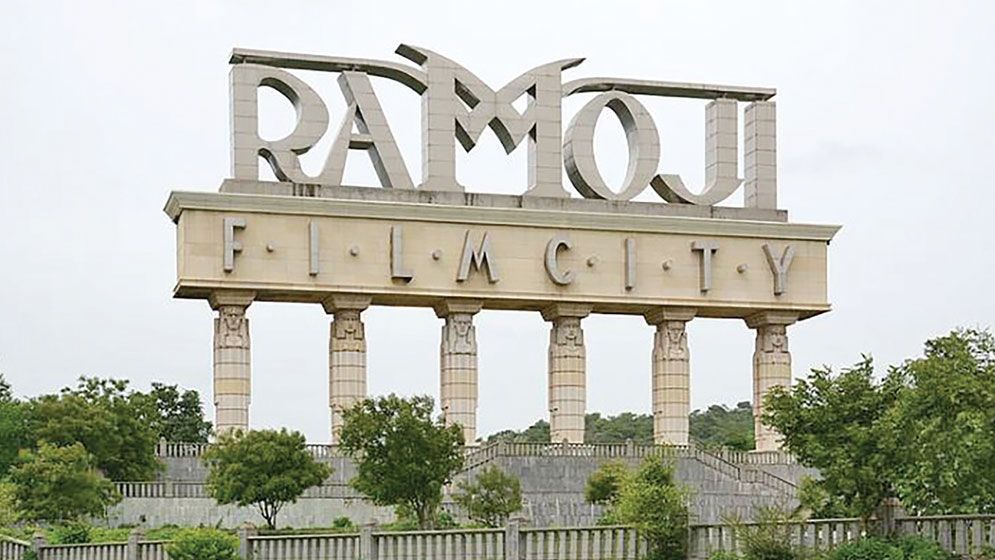
On the outskirts of Hyderabad, India, lies Ramoji Film City, where visitors can experience the streets of a European city, an ancient Indian royal palace, Mughal architecture, a railway station, an airport or an ordinary village – all within a day. These are elaborate filmmaking sets rather than real locations.
Recognised by Guinness World Records as the world's largest film studio complex, Ramoji Film City is an integrated hub for filmmaking, tourism, entertainment and business.
Recently, we visited the facility during a workshop in Hyderabad. Exploring its enormous sets offered an insight into the infrastructure, planning and work required to create cities, palaces and scenes representing different countries for just a few minutes of screen footage.
From a dream to a vast city of cinema
Ramoji Film City was founded in 1996 by Cherukuri Ramoji Rao, a prominent figure in India's media and business sectors, who built an influential position through newspapers, television, films and other ventures.
Inspired by large-scale Hollywood studio systems, Rao envisioned a facility tailored to the Indian film industry, where filmmakers could access locations, studios, set-construction facilities, props, technical support and other essential services without travelling to different cities and villages. The aim was to reduce production time and financial and management costs, allowing filmmakers to focus on creative work.
According to its official website, the facility has since developed into an important centre for filmmaking, tourism and entertainment. Rao died on 8 June 2024, aged 87, but the cinematic city he established continues to serve as a major infrastructure hub for India's film industry.
Hundreds of film locations in one place
Ramoji Film City offers more than 500 shooting locations, according to India Cine Hub. These include modern city streets, villages, royal palaces, hospitals, prisons, airports, railway stations, multi-storey buildings, European streets, Mughal and Japanese gardens, temples and historical structures.
Sets can be transformed through changes in decoration, lighting, camera angles and arrangements to meet different production requirements. Its official website lists a wide range of ready-to-use locations, including North and South Indian village settings, markets, roads and urban environments.
The facility can accommodate around 20 international and nearly 40 Indian film productions simultaneously. Government information puts its workforce at approximately 6,000.
From Mahishmati in ‘Baahubali’ to ‘Chennai Express’
Ramoji Film City has hosted numerous popular Indian films, particularly SS Rajamouli's “Baahubali” and “Baahubali 2”, for which magnificent sets recreated the palaces and royal structures of the fictional kingdom of Mahishmati.
According to a statement by Rajamouli published on the institution's website, the entire production unit was based at Ramoji Film City for both instalments. Support teams from different departments made the shooting process much easier.
Several Bollywood productions have also used its facilities. Other films associated with the complex include “Ghajini”, “Robot” or “Enthiran”, “Dilwale”, “Golmaal: Fun Unlimited”, “Krrish 3” and “Cocktail”. Some London-based scenes in the 2012 film “Cocktail” were also shot using its sets.
For Indian audiences, therefore, Ramoji Film City is not just a studio but the real-world location behind many familiar films.
The stories behind famous film songs
Ramoji Film City has also hosted the shooting of numerous popular film songs. “Titli” from “Chennai Express”, featuring Shah Rukh Khan and Deepika Padukone, was filmed on a specially constructed South Indian village set.
A special set, with carefully arranged lighting and decoration, was created for “Ooh La La” from “The Dirty Picture”. “Saahore Baahubali” from “Baahubali” features parts of the magnificent Mahishmati sets, including its palace and royal surroundings.
The facility's contribution to the set construction and filming of “Arima Arima” from the Tamil film “Enthiran” has also been mentioned in entertainment media reports.
The song “Karale Karalinte Karale” from the Malayalam film “Udayananu Tharam” was also filmed there. According to Onmanorama, citing director Rosshan Andrrews, a significant portion of the movie was shot at the facility.
Shooting songs requires extensive preparation, including sets, lighting, cameras, choreography, costumes and technical arrangements. Ramoji Film City's integrated facilities allow productions to organise all these activities within the same complex.
A complete filmmaking ecosystem
Beyond shooting locations, Ramoji Film City provides facilities for different stages of production, from set design, costumes, props, transportation, cameras and lighting to editing, dubbing, sound integration and other post-production work.
According to India Cine Hub, its facilities include departments for set construction, costumes and props, studios and technical services. Maya, its set design and construction division, builds structures to meet production requirements, while Parade handles costumes and props.
Whether a production needs a royal palace, city street, village house or historical structure, these can be created within the complex. This integrated system helps filmmakers reduce production time and management costs, particularly for big-budget films requiring multiple locations and elaborate sets.
Beyond filmmaking: A vast tourism destination
Ramoji Film City has also developed into a major tourist attraction. According to its official website, approximately 1.5 million tourists visit annually.
Studio tours, film sets, live shows, entertainment activities, food outlets, hotels and adventure facilities attract visitors. Designated transport takes tourists around the complex, where they can explore shooting locations, gardens, theme-based structures, entertainment rides and live performances.
The facility also hosts various events, demonstrating how a film studio can develop into a major tourism destination.
The integration of cinema, tourism and the economy
Ramoji Film City's operations extend beyond filmmaking, supporting employment and businesses in tourism, hotels, transport, food services, costumes and set construction.
Major film productions require actors, directors, camera and lighting crews, set builders, costume designers, transport workers and technical specialists.
Tourists, in turn, sustain hotels, restaurants, transport and other services. According to Indian government information, the facility can employ approximately 6,000 people.