


 For all latest news, follow the Daily Sun's Google News channel.


Abul Kashem Fazlul Haq no more
Daily Sun Report, Dhaka
Published: 06 Jul 2026, 12:00 AM
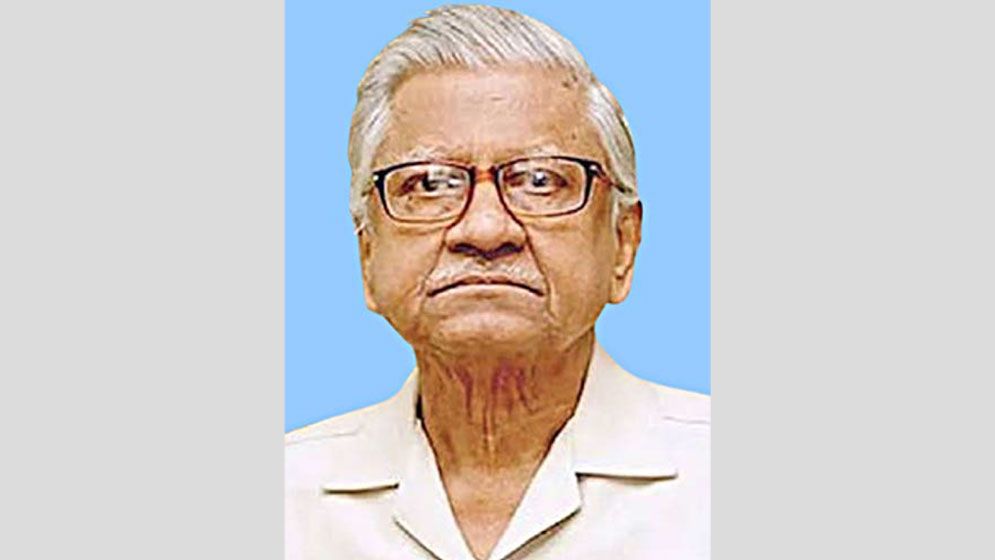
Eminent scholar, thinker and author Abul Kashem Fazlul Haq died of a cardiac arrest on Sunday afternoon. He was 85.
He suddenly fell ill while attending a family gathering in Mirpur on the day. He was rushed to a hospital, where doctors announced him dead between 2:30pm and 3pm.
Abul Kashem Fazlul Haq, also the chairman of the Bangla Academy and a former professor and chairman of the Bangla department at Dhaka University, was one of the leading researchers and essayists, earning a special status in the country’s intellectual arena for his neutral political analysis, and original thoughts on literature and culture.
He also served as the “Ahmed Sharif Chair” Professor of Dhaka University.
He left behind his wife, a daughter, and numerous students, followers and well-wishers to mourn his death.
His daughter Shuchita Sharmin teaches at the Development
Study department at Dhaka University. His son, publisher and owner of Jagriti Prokashony, Faisal Arefin Dipon, was murdered by Islamist militants on 31 October 2015.
His son, publisher Faisal Arefin Dipon, owner of Jagriti Prokashony, was hacked to death by Islamist militants on 31 October 2015.
A pall of gloom descended on the country’s academic, political and cultural arena following the spread of the news of his death.
Prime Minister Tarique Rahman expressed deep shock and sorrow at the death of Prof Abul Kashem Fazlul Haq.
In a message of condolence, he said, “The country has lost an eminent educationist and writer at the death of Haq. His death created a vacuum in the country’s arena of education which will never be filled easily.”
The premier also prayed for eternal peace of the departed soul and conveyed profound sympathy to bereaved family members.
Born in Kishoreganj’s Pakundia on 30 September 1940, Haq completed his secondary education at Mymensingh Zilla School and higher secondary studies at Ananda Mohan College before enrolling at Dhaka University.
After earning his Bachelor and Master’s degrees in Bangla, he joined the university’s Department of Bangla as a lecturer, where he taught four decades.
Beyond academia, Haq remained one of the country’s most influential public intellectuals.
An outspoken advocate for the use of the Bangla language at all levels this literary critic and commentator is the convener of the Rashtrya Bhasha Bangla Rokkhya Committee. He served as president of Swadesh Chinta Sangha from 2000 to 2013.
Haq also regularly edited two periodicals named “Sundaram” and “Lokayoto”.
Prof Haq penned around 20 books, including “Ekushey February Andolan”, “Rajniti Dorshon”, “Muktisangram”, “Kaler Jatrar Dhwani”, “Sahitya Chinta”, “Songskritir Sohoj Kotha”, “Naitikata: Shreyoniti O Durniti”, “Jugasankranti O Nitijiggasa”, “Mao Setunger Gyanatattwa”, “Abakkhoy O Uttaran”, and “Bangladesher Rajnitite Buddhijibider Bhumika”, apart from editing books like “Itihasher Aloke Bangladesher Songskriti” and “Swadesh Chinta”.
He also translated two works by British philosopher Bertrand Russell and edited several books.
A recipient of Bangla Academy Literary Award in 1981, he was a member of the editorial board of “Nazrul Rachanabali” (Essays of Nazrul).
Prof Haq’s first namaz-e-janaza (funeral prayer) will be held at the Masjidul Aman in Pallabi after the Fazr prayer.
His mortal remains will be taken to the Bangla Academy from 10am to 10:30am. From 11am to 12:30pm, the coffin will be taken to the Central Shaheed Minar. It will also be taken to Aparajeyo Bangla at 12pm.
He is expected to be buried at the Martyred Intellectuals' Graveyard in Mirpur following his second namaz-e-janaza to be held at 1pm at the Dhaka University Central Jame Mosque.
BNP Secretary General and Minister for Local Government, Rural Development, and Co-operatives Mirza Fakhrul Islam Alamgir, Cultural Affairs Minister Advocate Nitai Roy Chowdhury, Dhaka University Vice-chancellor Prof ABM Obaidul Islam and Bangla Department Chairman Dr Sirajul Islam, Bangla Academy Director General Prof Mohammad Azam, Dhaka University Sada Dal, among others, mourned the death of Prof Haq.